Agentic AI vs AI Automation: What Business Owners Should Know
A practical guide to choosing between AI automation and agentic AI for business workflows.

By Kelis
Founder
Business owners are hearing two phrases everywhere: AI automation and agentic AI.
They sound similar, but they are not exactly the same.
AI automation means using AI and software to reduce manual work. Agentic AI means using AI agents that can understand context, choose steps, use tools, and complete parts of a workflow with more flexibility.
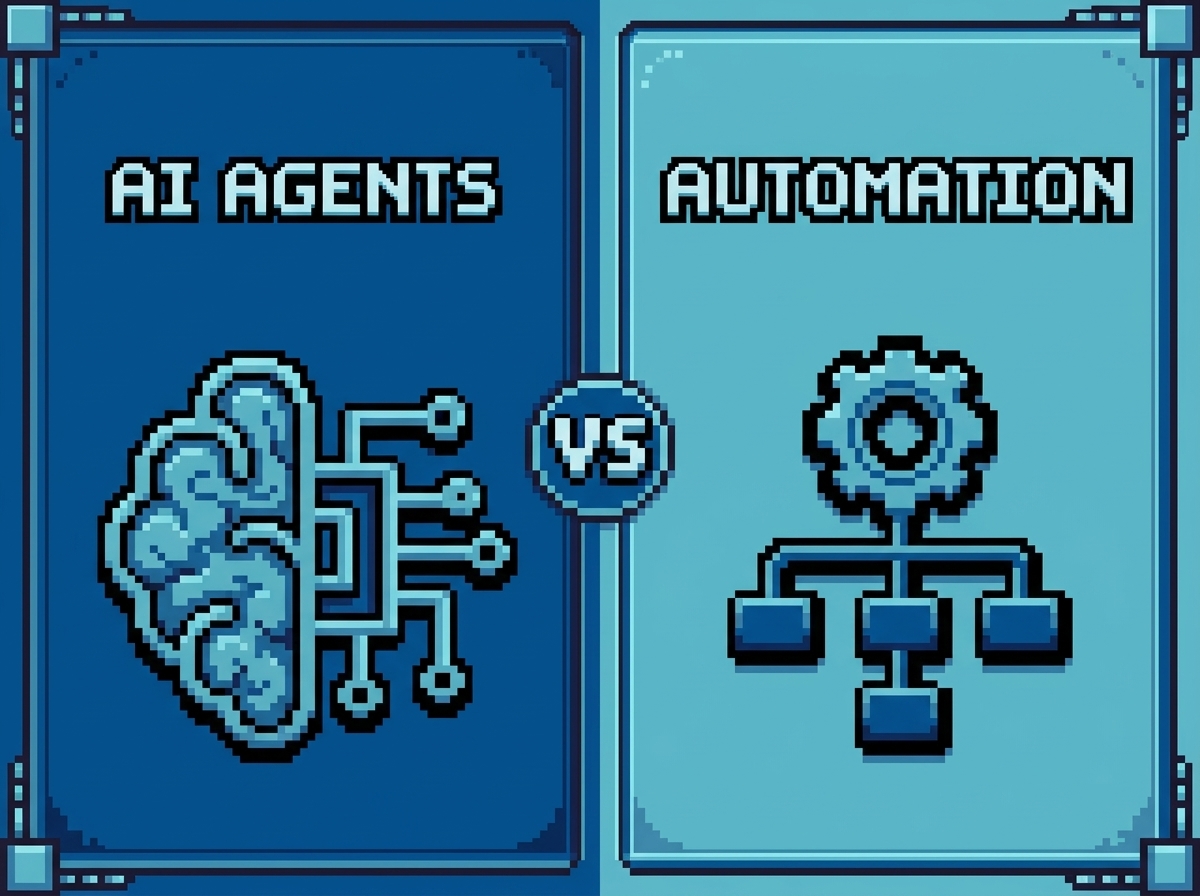
The simple version: AI automation follows a workflow. Agentic AI can help decide how to move through the workflow.
What Is AI Automation?
AI automation is the use of automation tools, AI models, integrations, and sometimes robotic process automation to complete repeated business tasks with less human effort.
It can help with:
Lead intake
CRM updates
Email classification
Follow-up reminders
Report summaries
Data syncing
Customer support routing
Document drafting
Browser or portal workflows
AI automation works best when the process is clear. For example, when a website form is submitted, the automation creates a CRM record, sends a Slack message, and schedules a follow-up.
That workflow may use AI to summarize the lead or classify the request, but the path is mostly fixed.
What Is Agentic AI?
Agentic AI uses AI agents that can work toward a goal across multiple steps.
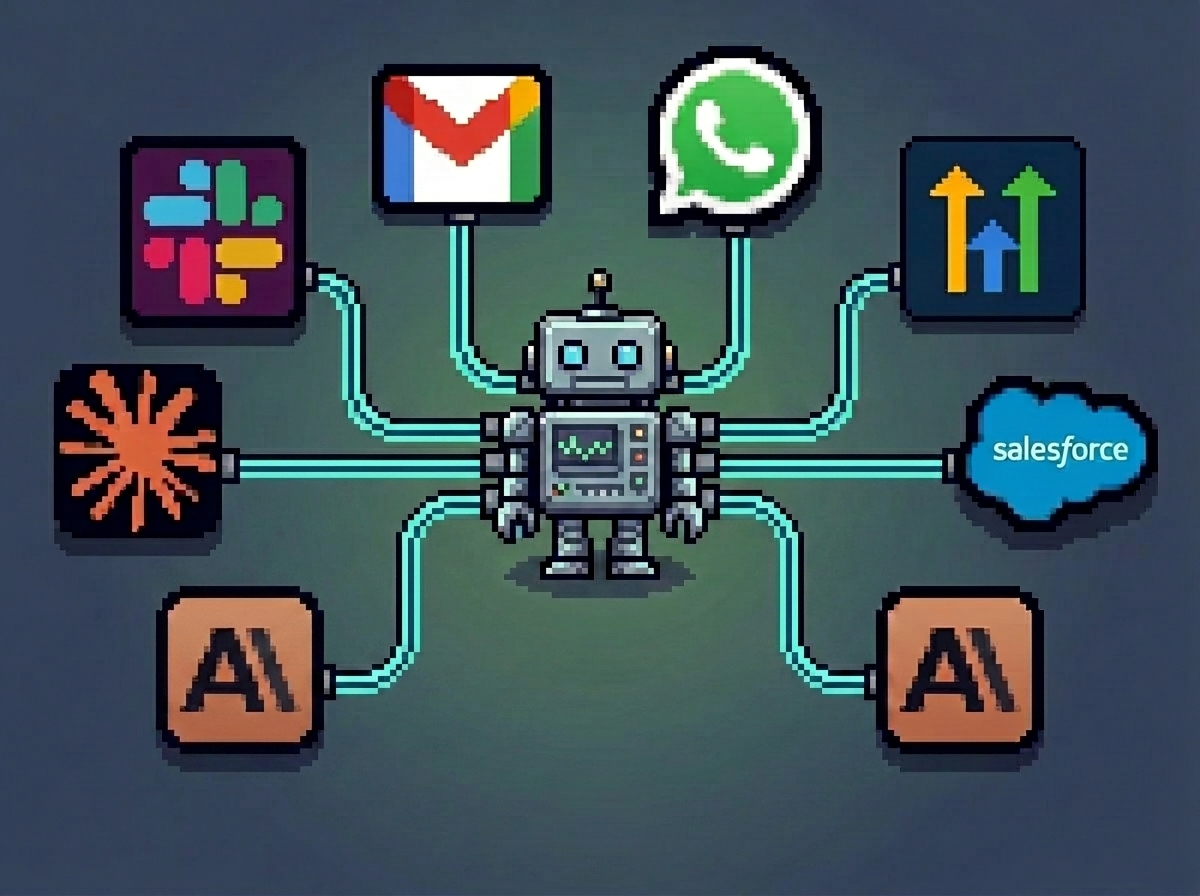
An AI agent can read context, decide what action to take, use tools, call APIs, search data, update systems, and ask for human review when needed. IBM and Google Cloud both describe AI agents as systems that can use tools and handle complex workflows, not just respond like a chatbot.
For example, an agentic AI workflow might receive a new lead, read the message, check the company website, compare it with your ICP, update the CRM, draft a personalized reply, and ask a human to approve the message before sending.
The difference is that the agent is not only following one fixed path. It is using context to choose the next step.
Agentic AI vs AI Automation: The Main Difference
AI automation is the broader category. Agentic AI is one method inside that category.
A useful way to think about it:
AI automation is good when the workflow is predictable.
Agentic AI is useful when the workflow needs judgment, context, or flexible steps.
For example:
If every new form submission should create the same CRM task, use AI automation.
If every new lead needs to be understood, researched, scored, routed, and followed up on differently, agentic AI may help.
Many businesses do not need to choose one forever. Strong systems often combine both. Rules handle stable steps. AI agents handle messy parts.
When Business Owners Should Use AI Automation
Use normal AI automation when the workflow is repeated, clear, and easy to define.
Good examples include:
Sending reminders
Updating CRM fields
Moving data between tools
Creating tasks from form submissions
Summarizing meeting notes
Tagging support tickets
Downloading reports
Sending standard follow-up sequences
This is usually cheaper, easier to maintain, and more predictable than agentic AI.
If the task can be explained with “when this happens, do that,” simple automation is often enough.
When Business Owners Should Use Agentic AI
Use agentic AI when the workflow changes based on context.
Good examples include:
Qualifying leads from messy messages
Reading documents and choosing next steps
Routing complex customer requests
Researching accounts before outreach
Preparing personalized follow-ups
Coordinating actions across multiple tools
Handling internal operations where the next step depends on the situation
Agentic AI is useful when rules alone become too rigid.
But it should still have boundaries. Microsoft’s agentic automation guidance emphasizes defined limits, and Salesforce also talks about guardrails for business agents. That matters because business workflows need control, not random autonomy.
What Business Owners Should Be Careful About
The biggest mistake is using agentic AI where simple automation would work.
Not every process needs an AI agent. Sometimes a normal workflow in Zapier, Make, n8n, HubSpot, Salesforce, or a custom backend is enough.
Another mistake is giving agents too much freedom too early. AI agents should not freely send sensitive emails, change payment data, submit legal documents, or make major business decisions without review.
A reliable agentic workflow needs:
Clear goals
Tool permissions
Human review points
Logs
Error handling
Testing with real examples
Fallback logic
Documentation
At SpidLabs, the practical approach is to map the workflow first. Then decide what should be rule-based automation, what should use AI, and what should stay with a human.
Final Thought
Agentic AI is not a replacement for automation. It is a more flexible layer of automation for workflows that need context.
If your process is predictable, automate it simply.
If your process needs reading, reasoning, classification, research, or adaptive next steps, agentic AI may be useful.
Start with the repeated workflow your team handles every week. The right technology choice becomes much clearer after that.
Read more:
AI Automation for small business
What is Agentic AI for business operations
FAQ
Is agentic AI the same as AI automation?
No. AI automation is the broader category. Agentic AI is a type of AI automation where agents can reason, use tools, and choose steps inside a workflow.
When should a business use normal AI automation?
Use normal AI automation for clear, repeated tasks like CRM updates, reminders, data syncing, summaries, and standard follow-up workflows.
When should a business use agentic AI?
Use agentic AI when the workflow needs context, classification, research, flexible decision-making, or multiple steps across tools.
Is agentic AI risky for business operations?
It can be risky without limits. Use permissions, logs, human approval, testing, and fallback logic before letting agents handle important workflows.
Can AI automation and agentic AI work together?
Yes. Many strong systems use normal automation for predictable steps and agentic AI for messy, context-heavy parts of the workflow.